Habitable Planets
Imagine standing on a distant planet and looking up at a sky filled with stars. Could humans one day live on another world?
The idea of habitable planets has fascinated humanity for centuries. As technology improves, scientists are becoming more capable of discovering distant worlds that may support life.
But what actually makes a planet suitable for life? The answer lies in a combination of physical and environmental conditions that determine whether life could exist.
What Makes a Planet Habitable?
Scientists use several key factors to determine whether a planet could support life.
Essential Conditions for Habitability:
- The habitable zone: A planet must orbit its star at a distance where temperatures allow liquid water to exist.
- Liquid water: Water is considered essential for life because it supports chemical processes necessary for living organisms.
- Atmosphere: A stable atmosphere helps regulate temperature and protects a planet from harmful radiation.
Additional Insight:
Planets that meet these conditions are considered strong candidates for further scientific study in the search for life beyond Earth.
Discovering Exoplanets
Exoplanets are planets located outside our solar system. Thousands have already been identified, and many are located within their star’s habitable zone.
Main Detection Methods:
- Transit method: Scientists detect planets by observing small dips in a star’s brightness when a planet passes in front of it.
- Radial velocity method: The gravitational pull of a planet causes its star to move slightly, which can be measured as a wobble.
- Direct imaging: Advanced telescopes can capture images of some exoplanets by blocking the light from their parent stars.
Additional Insight:
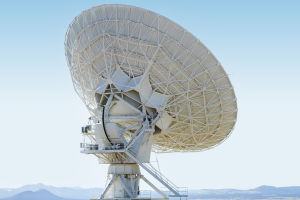
Space missions such as NASA’s TESS and the James Webb Space Telescope continue to expand our understanding of distant planetary systems.
The Role of Atmosphere in Habitability
A planet’s atmosphere plays a crucial role in supporting life and maintaining stable conditions.
Key Atmospheric Factors:
- Life-supporting gases: Certain gases are important for biological processes and maintaining planetary balance.
- Climate stability: A stable atmosphere helps prevent extreme temperature changes.
- Magnetic protection: A strong magnetic field can protect a planet’s atmosphere from being stripped away by solar wind.
Additional Insight:
Studying atmospheric composition helps scientists determine whether a planet may support life.
Earth-Like Planets
Scientists often focus on identifying Earth-like planets because they may share similar conditions with Earth.
Key Characteristics:
- Similar size to Earth: This supports stable gravity and the ability to hold an atmosphere.
- Rocky surface: Solid surfaces may support oceans, landforms, and geological activity.
- Location in the habitable zone: This increases the likelihood of liquid water existing on the surface.
Additional Insight:
Some exoplanets discovered so far are considered strong candidates for further study due to their similarity to Earth.
Searching for Signs of Life
Beyond finding habitable planets, scientists also search for evidence of life.
Possible Indicators:
- Chemical biosignatures: Certain gases in a planet’s atmosphere may suggest biological activity.
- Water and organic molecules: These are fundamental components for life as we know it.
- Environmental changes: Variations in atmospheric composition may indicate active biological processes.
Additional Insight:
Advanced telescopes are currently used to analyze exoplanet atmospheres for potential signs of life.
Future of Space Exploration
Future technologies are expected to greatly improve our ability to study distant planets.
Emerging Technologies:
- Next-generation telescopes: Larger and more advanced telescopes will provide clearer observations of exoplanets.
- Interstellar probes: Future spacecraft may travel beyond our solar system to study nearby star systems directly.
Additional Insight:
Space agencies around the world are developing missions that will continue to improve our understanding of distant planetary systems.
The search for habitable planets is one of the most important scientific efforts of our time. As technology advances, humanity continues to move closer to answering one of the biggest questions: whether life exists beyond Earth.
Each new discovery brings us closer to understanding the universe and our place within it.

Contact to : xyjph123@gmail.com
Privacy Agreement
Copyright © boyuanhulian 2020 - 2022. All Right Reserved.
Privacy Agreement
Copyright © boyuanhulian 2020 - 2022. All Right Reserved.