The Expanding Universe
Ever wondered how the universe grew from an infinitely small point to the vast expanse we see today?
Imagine it: every star, galaxy, and planet racing away from each other, like distant ships floating on an endless ocean.
This is the essence of cosmic expansion, a concept that continues to astonish astronomers and physicists alike. But what drives this seemingly endless stretching of space? Let's dive into the science behind the universe's growth.
The Beginning of It All
To understand cosmic expansion, we first need to look back at the universe's early moments. Approximately 13.8 billion years ago, the universe began in a state of extreme density and heat. This event, which marked the universe's birth, set the stage for continuous expansion that followed. Over time, this initial expansion of space-time and energy led to the creation of stars, galaxies, and all the matter we know today.
The concept of cosmic expansion is rooted in the idea that space itself is stretching, not just the objects within it. This means that as galaxies move further apart, they are not traveling through space in the usual sense. Instead, the space between them is growing. A helpful way to picture this is by imagining dots on the surface of a balloon. As the balloon inflates, the dots move away from each other because the surface itself is expanding.
The Role of Dark Energy
One of the most intriguing elements in the study of cosmic expansion is dark energy. This mysterious phenomenon is believed to be responsible for the accelerated expansion of the universe. Scientists first noticed this acceleration in the late 1990s when they observed distant supernovae that were dimmer than expected, suggesting they were farther away. This led to the conclusion that the expansion of the universe is accelerating.
Dark energy makes up about 69 percent of the universe's total energy content, yet it remains invisible and undetectable by conventional methods. We know it exists because of its effects on the expansion of the universe, but understanding its true nature remains one of the biggest challenges in modern cosmology.
Measuring Cosmic Expansion
Understanding cosmic expansion is no easy task. To study the universe's growth, astronomers rely on methods such as observing the redshift of distant galaxies. Redshift occurs because as galaxies move away from us, their light is stretched into longer wavelengths, shifting toward the red end of the spectrum. By measuring this shift, scientists can determine how fast galaxies are receding and estimate the rate of expansion.
One important tool in this research is the Hubble Space Telescope, which has provided detailed observations of distant galaxies. These measurements help scientists refine the Hubble constant, a value that describes how quickly the universe is expanding. However, there is still ongoing discussion among scientists about the exact value of the Hubble constant, which suggests that our understanding of cosmic expansion is not yet complete.
The Fate of the Universe
Given that the universe has been expanding for billions of years, a major question remains: what will happen in the future? Several possible outcomes exist, depending on the behavior of dark energy and the total amount of matter in the universe.
Continued Expansion
If dark energy continues to drive accelerated expansion, the universe may eventually reach a state where stars burn out, galaxies drift apart beyond interaction, and the cosmos becomes increasingly cold and dark over time.
Big Crunch
If the expansion were to slow and reverse, gravity could eventually pull everything back together, leading to a scenario where the universe collapses inward. Current observations suggest this outcome is unlikely based on what we know today.
Big Rip
Another theoretical possibility is a scenario in which expansion accelerates so strongly that galaxies, stars, planets, and even atomic structures are gradually pulled apart as space itself stretches at an extreme rate. This remains a hypothetical idea and has not been confirmed by observations.
These possibilities depend on factors such as the nature of dark energy and the total composition of the universe, both of which are still not fully understood.
A Universe in Flux
Cosmic expansion is not just an abstract idea; it is a fundamental feature of the universe's history and future. While many questions remain about dark energy and the ultimate fate of the cosmos, one fact is clear: the universe is constantly changing. As scientific tools and observations improve, our understanding of the forces shaping the universe will continue to deepen.
The mystery of cosmic expansion shows that there is always more to discover beyond what we currently know. As exploration continues, humanity moves closer to understanding where the universe came from and where it may be heading.
-
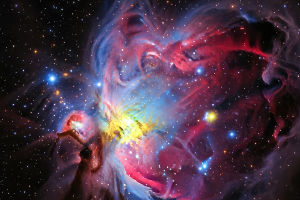 Secrets of Interstellar DustHow Tiny Cosmic Particles Shape Stars, Galaxies, and the Evolution of the Universe
 -
 Journey Beyond EarthUnderstanding the Scientific and Engineering Challenges of Interplanetary Exploration
 -
 Latest Mars Rover MissionsNew Discoveries and What They Mean for the Future of Mars Exploration
Contact to : xyjph123@gmail.com
Privacy Agreement
Copyright © boyuanhulian 2020 - 2022. All Right Reserved.
Privacy Agreement
Copyright © boyuanhulian 2020 - 2022. All Right Reserved.