What's in a Planet's Air
You'd think every planet's atmosphere would be a simple mix of the same few gases, but the recipe changes wildly from world to world.
Earth's air is 78 percent nitrogen and 21 percent oxygen. Venus, roughly the same size, is 96 percent carbon dioxide. Same neighborhood, totally different brew.
The Rocky Planets Split Fast
Mercury barely counts, since its "atmosphere" is a thin scatter of atoms blasted off the surface by the solar wind, mostly sodium and oxygen at pressures far below a trillionth of Earth's. Venus is the exact opposite: a crushing carbon dioxide shell with clouds of sulfuric acid and a surface pressure around 90 times what you feel at sea level. Mars sits in between, with a thin carbon dioxide atmosphere at about 0.6 percent of Earth's pressure, with just traces of oxygen and argon.
Gas Giants Run on Hydrogen
Jupiter and Saturn are dominated by hydrogen and helium, close to the Sun's own mix. Jupiter's atmosphere is roughly 90 percent hydrogen and 10 percent helium by volume, with small amounts of methane, ammonia, and water vapor. Those trace gases do the visible work. Ammonia crystals form the white cloud bands you see in photos, and Jupiter's Great Red Spot gets its color from complex chemistry in the upper clouds.
Ice Giants Carry Methane
Uranus and Neptune also contain hydrogen and helium, but methane makes up around 1 to 2 percent, which is what gives both planets their blue tint. Methane absorbs red light and lets blue through. Uranus appears paler because its methane haze lies beneath a thicker layer of photochemical smog. Neptune's deeper blue comes from an unknown compound on top of the methane.
Moons and Exoplanets Bend the Rules
Titan, Saturn's largest moon, has a nitrogen atmosphere denser than Earth's at the surface, around 95 percent nitrogen with a few percent methane. That's the only moon in the solar system with a substantial atmosphere. Beyond our neighborhood, hot Jupiters like HD 209458 b show sodium in their spectra, and some smaller exoplanets appear to be losing helium into space.
Why the Mix Matters
The composition tells you the history. A planet with a thick carbon dioxide atmosphere and no water, like Venus, likely lost its oceans to a runaway greenhouse effect. Earth kept liquid water and built up oxygen only after life started pumping it out around 2.4 billion years ago. Read the gases, and you read the planet's past.
Next time you look up at a bright point in the night sky, remember you're seeing a whole different air supply up there. The mix is the story.
-
 Spiral Galaxies' FormationDust, Gas, and a Few Billion Years of Gravity Do Most of the Work
-
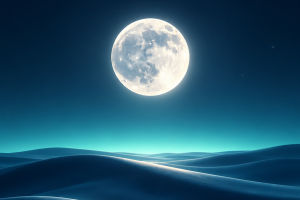 The Moon’s PhasesWhy Does the Moon Change Shape? Discover the Surprising Science Behind Its Crescent and Full Moon Phases
-
 How Astronauts AdaptWeightlessness, isolation, radiation, and reentry force real physical and mental changes.
Contact to : xyjph123@gmail.com
Privacy Agreement
Copyright © boyuanhulian 2020 - 2022. All Right Reserved.
Privacy Agreement
Copyright © boyuanhulian 2020 - 2022. All Right Reserved.