Wide vs Telephoto Lenses
Hello, and thank you for reading. You're standing somewhere with a camera, and the scene looks great in person but flat and confusing through the viewfinder.
That gap usually comes down to one choice: which lens is on the front of your camera. Wide and telephoto glass do genuinely different jobs, and knowing which one fits the moment is most of the battle.
Wide lenses want to be close
A 16mm or 24mm lens spreads the frame wide and pushes everything in it back, so distant objects shrink while nearby ones grow. That's why landscape photographers reach for something like a 16-35mm on a coastline, where you want the rocks at your feet and the horizon both in the shot. You don't just point it at a view, you walk into the view. Get within a meter or two of your foreground and the depth reads properly.
Telephoto compresses the layers
A 70-200mm does the opposite. It narrows what you see and pulls distant elements toward each other, stacking them into tight layers. Shoot a mountain range at 200mm and the peaks look piled up behind one another, closer than they really are. Wildlife shooters live here because you can't walk up to a heron, but a 400mm gets you a full frame of it from across a lake.
Portraits split down the middle
For people, the focal length changes the face itself. An 85mm is the classic portrait length because it keeps features in natural proportion. Step in with a 24mm and noses and chins stretch toward the lens, which is fine if you want that look, less fine if you don't. A 50mm sits between the two and works when you're moving around a subject rather than posing them.
When space decides for you
Indoors, a wide lens is often the only option. A 16mm fits a whole room, a staircase, or a tight alley where a 50mm would show you a wall. Outdoors at a stadium or on a safari, the telephoto is the only way to fill the frame. Match the lens to how much room you actually have, not to how much you wish you had.
The distortion trade-off
Wide lenses bend straight lines near the edges, so a building shot at 16mm can lean inward at the top. Tilt the camera up and it gets worse. Keeping the camera level and cropping later fixes most of it. Telephotos don't bend lines, but they magnify shake, so at 300mm you'll want a shutter speed around 1/300s or faster to stay sharp.
One lens, two habits
If you carry a 24-105mm, you already own both worlds. Shoot the wide end when you want context and the long end when you want isolation. Try the same scene at 24mm and at 105mm back to back, and the difference stops being theory. That single exercise teaches more than any chart.
Next time a scene looks wrong through the viewfinder, change the lens before you change anything else. The right focal length often fixes the shot that framing alone can't.
-
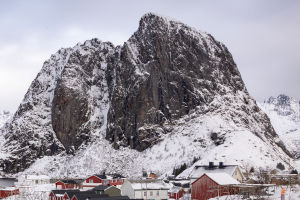 Why Focal Length MattersSame spot, same subject, two lenses, two completely different photos. Here is what is actually happening.
-
 Why Higher ISO Adds NoiseTurning up ISO does not create noise from nothing. It just makes the signal you already captured, and its flaws, easier to see.
-
 Write Villains Who Feel RealThe most memorable villains have motives we recognize, even when their actions horrify us
Contact to : xyjph123@gmail.com
Privacy Agreement
Copyright © boyuanhulian 2020 - 2022. All Right Reserved.
Privacy Agreement
Copyright © boyuanhulian 2020 - 2022. All Right Reserved.