Negative Space, Big Impact
Hi there, readers. Most people think a painting is about what you put on the canvas: the colors, the shapes, the details you pile up until it feels complete.
But flip that idea around for a second. Some of the most powerful paintings work because of what the artist left out, and that emptiness has a name: negative space, or, in Chinese painting, 留 白.
It's not just blankness you forgot to fill. It's a deliberate tool, and once you start noticing it, you'll see it everywhere.
Why empty areas sharpen focus
When you crowd every inch of a canvas with stuff, your eye has nowhere to rest, and the main subject gets lost in the noise. Negative space clears a path for you. It acts as a quiet zone around what matters, so your gaze lands exactly where the artist intended. Take the classic example of a single goldfish swimming in a large, pale blue rectangle. The fish only occupies a tenth of the frame, but you can't look away from it. That emptiness forces your attention onto the fish's curve, its fin movement, the tiny bubbles near its mouth. The same logic applies to a portrait in which the subject sits small against a wide, plain background; the isolation makes the person feel more significant, even a little lonely.
Silence gives shapes their voice
Negative space isn't passive; it actively defines what you see. Think about the famous optical illusion where two faces in profile face each other, and the space between them forms a vase. You can't see the vase without the faces, and you can't see the faces without the vase. That's negative space working as a co-creator of the image. In a landscape painting, the gaps between mountain peaks, the blank sky above a ridge, those empty patches tell you the scale of the peaks. A tree painted with thin branches against a vast white background looks more delicate and brittle than the same tree drawn with every leaf filled in. The void gives the solid shapes their edge.
Breathing room shifts the mood
A packed canvas feels busy, anxious, almost suffocating. Lots of negative space does the opposite; it slows you down and sets a calmer tone. Compare a dense Dutch still life with overflowing fruit and silverware to a minimalist ink wash of a single bamboo stalk on rice paper. The bamboo drawing, with its wide empty margins, feels meditative. The emptiness suggests a breeze, a pause, a moment before the wind moves the leaves. That's why so many Zen-inspired works lean heavily on blank areas; the quiet itself becomes part of the emotional content. You feel less rushed when you look at them, and that's a real, physical response, not just an aesthetic preference.
A trick your eyes learn to love
Here's a playful side of negative space: it invites you to complete the picture yourself. When an artist leaves a shape half-suggested, your brain fills in the rest, and that act of participation makes the artwork more memorable. Look at a painting of a heron standing at the water's edge, where the reflection is only hinted at with a few soft strokes. You automatically imagine the full reflection, the ripples, the second bird. You become part of the creative process without realizing it. This works with color too. Leave an area unpainted, just the raw canvas or paper, and your mind treats it as light, air, or water, depending on what surrounds it. The same blank patch can read as snow in one painting and as mist in another.
When you next stand in front of a painting that feels strangely peaceful, don't just look at what's there. Look at what's missing. The empty space is doing heavy lifting, guiding your eyes, shaping the forms, setting the mood, and pulling you into the scene. Next time you pick up a brush, try leaving a corner untouched on purpose. You might find that what you don't paint says more than what you do.
-
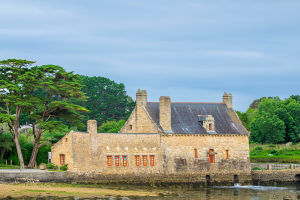 Traditional CoolingCenturies-old designs show how buildings can work with wind, shade, and heat
-
 Aperture and Depth of FieldHow the size of the hole in your lens determines what stays sharp and what softens.
-
 Exposure Triangle BasicsAperture, shutter speed, and ISO do not work alone. Change one and the other two push back.
Contact to : xyjph123@gmail.com
Privacy Agreement
Copyright © boyuanhulian 2020 - 2022. All Right Reserved.
Privacy Agreement
Copyright © boyuanhulian 2020 - 2022. All Right Reserved.