Saturn Rings: Ice & Gravity
Saturn's rings look like enormous, smooth bands wrapped around the planet. Through a small telescope, they can appear almost solid, as though they form one continuous structure. In reality, they consist of countless separate particles, each moving around Saturn under the influence of gravity.
Made mostly of water ice, the rings are among the most remarkable structures in our solar system. Their appearance is shaped by orbital motion, collisions, and the gravitational influence of Saturn's moons. Although they seem permanent from Earth, they are constantly evolving.
What Are Saturn's Rings Made Of?
Saturn's bright main rings consist predominantly of water ice, mixed with smaller amounts of rocky material, dust, and other contaminants. Some regions contain especially clean ice, while others show signs of darker material.
The particles vary greatly in size, from tiny grains to chunks several meters across. Some larger temporary clumps and structures also develop within the rings as particles interact with one another.
Despite their enormous width, the main rings are remarkably thin compared with their diameter. In many places, their vertical thickness is only on the order of tens of meters, although local structures can extend much farther.
From Earth, the immense number of particles makes the rings appear smooth and continuous. In reality, each particle follows its own orbit, and collisions continually influence how the material moves.
NASA's Cassini spacecraft, which orbited Saturn from 2004 to 2017, provided detailed observations of the rings' composition, structure, and dynamics. Its measurements helped scientists investigate the rings' mass, icy surfaces, and ongoing interactions with Saturn and its moons.
Why Don't the Rings Fall Into Saturn?
Saturn's rings do not remain in place because gravity is weak. In fact, Saturn's gravity is the main force keeping their particles in orbit.
Each particle moves sideways around the planet while gravity continually changes the direction of its motion. Instead of falling straight toward Saturn, the particle follows a curved orbital path.
In the main rings, typical orbital speeds are on the order of 15 to 25 kilometers per second, depending on distance from the planet. Particles closer to Saturn generally orbit faster than those farther away.
This difference in speed is important because the rings do not rotate as a solid disk would. Neighboring particles can move at slightly different speeds, collide, and exchange energy and momentum.
The basic principle is similar to the motion of moons and artificial satellites. However, Saturn's rings are more complex because they consist of vast numbers of interacting particles rather than a single orbiting object.
How Gravity Shapes the Ring System
Saturn's rings are divided into several major regions. The bright A and B rings are especially prominent, while the fainter C ring lies closer to the planet. Additional rings, including the narrow F ring, extend beyond these main structures.
One of the most recognizable features is the Cassini Division, a broad, relatively low-density region between the A and B rings. Although it appears dark through telescopes, it is not completely empty.
Gravitational resonances with Saturn's moons help shape gaps and edges within the rings. The moon Mimas plays an important role in defining the inner edge of the Cassini Division through a particular orbital resonance.
Other moons also influence ring particles. Prometheus and Pandora interact gravitationally with the narrow F ring, helping produce its changing strands, gaps, and other intricate features.
Within the rings, particles continually collide and respond to small gravitational disturbances. These interactions create waves, temporary clumps, and patterns that can change over time.
The result is a highly organized but dynamic system, shaped by the combined effects of Saturn's gravity, its moons, and the motion of the ring particles themselves.
Will Saturn's Rings Eventually Disappear?
Saturn's rings are not necessarily permanent. Scientists have observed evidence that ring material can move toward the planet and enter its atmosphere through processes often described as ring rain.
Charged particles, interactions with Saturn's magnetic field, and other physical processes can contribute to the loss or redistribution of ring material. Collisions and gravitational interactions also influence the rings' long-term evolution.
Some studies have suggested that the rings could lose much of their present material over timescales of hundreds of millions of years. However, estimates vary, and the processes controlling their evolution remain subjects of active research.
The rings' age is also debated. Their relatively bright, clean ice has been interpreted as evidence that they may be younger than Saturn itself, but other explanations and measurements leave room for older origins.
What astronomers can say with confidence is that the rings are changing. Their present appearance reflects an ongoing balance of orbital motion, gravitational interactions, and processes that gradually redistribute or remove material.
Saturn's rings are not solid bands suspended around the planet, but an enormous collection of icy particles moving along individual orbits. Gravity keeps those particles circling Saturn, while collisions and the influence of nearby moons continually reshape the ring system. Cassini's observations revealed how intricate and active these seemingly peaceful structures really are. Although scientists are still investigating when the rings formed and how long they will survive, their beauty is matched by the fascinating physics behind them.
-
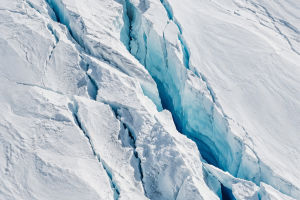 The Blue GlacierWhy Are Glaciers Blue? Discover How Sunlight and Dense Ice Produce Natural Shades of Blue
-
The Blue GlacierWhy Are Glaciers Blue? Discover How Sunlight and Dense Ice Produce Natural Shades of Blue
-
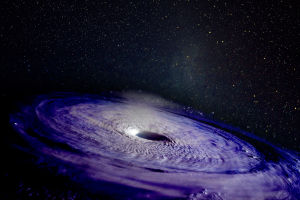 What A Black Hole Really IsNot a cosmic vacuum cleaner. A place where gravity wins, and the rules you know stop working
Contact to : xyjph123@gmail.com
Privacy Agreement
Copyright © boyuanhulian 2020 - 2022. All Right Reserved.
Privacy Agreement
Copyright © boyuanhulian 2020 - 2022. All Right Reserved.