Reading Mars in Rock Cores
A small cylinder of Martian rock may contain clues to a world that looked very different billions of years ago. Ancient rivers, lakes, and chemical reactions can leave traces in minerals and rock textures, giving scientists a way to investigate Mars's distant past.
NASA's Perseverance rover is already collecting and sealing rock cores on Mars. Future astronauts may carry out similar work, but the challenge goes far beyond drilling into stone. Scientists must choose meaningful targets, protect samples from contamination, and record exactly where each piece came from.
Why Rock Cores Are So Valuable
A rock core preserves material from inside a rock, including mineral grains, textures, and sometimes fine layers that may be difficult to examine on an exposed surface. These features can help scientists reconstruct how the rock formed and what happened to it afterward.
However, a short core does not necessarily provide a complete timeline from top to bottom. Its scientific value also depends on the surrounding geology, the direction of drilling, and detailed observations of the sampling location.
Perseverance collects cores about 13 millimeters wide and typically around 60 millimeters long, roughly the size of a piece of classroom chalk. Despite their small size, these samples can preserve valuable evidence of ancient Martian environments.
Choosing the Right Place to Drill
Selecting a sample begins with understanding the surrounding landscape. Scientists examine rock layers, mineral composition, textures, and signs of past water interaction before deciding which locations warrant closer investigation.
Fine-grained sedimentary rocks are especially interesting because they can preserve delicate chemical and structural evidence. But coarser sediments, volcanic rocks, and water-altered rocks can also reveal important parts of Mars's history.
Perseverance explores Jezero Crater, where an ancient river once entered a lake and deposited sediment. By sampling different geological settings, the mission aims to build a broader record of the crater's changing environment.
The ideal target must also be accessible and suitable for drilling. A scientifically interesting rock is of limited use if the sampling equipment cannot safely reach it.
How Perseverance Collects a Core
Perseverance begins by studying a potential sampling target with its cameras and scientific instruments. The rover can grind away a small patch of weathered surface material to expose fresher rock, then examine the newly revealed textures and chemistry.
When scientists select a location for coring, the rover positions its robotic arm and uses a rotary-percussive drill. The tool rotates and can deliver hammerlike impacts to cut a cylindrical piece of rock, which enters a sample tube inside the drill bit.
The rover then transfers the tube into its internal sampling system, where the sample can be inspected before the container is sealed and stored.
Perseverance carried 43 sample tubes to Mars, including five witness tubes designed to monitor contamination. These operations are carefully planned because each sampling attempt uses limited hardware and mission resources.
Protecting Samples From Contamination
Keeping Martian samples clean is essential, particularly when scientists hope to investigate possible signs of ancient life. Organic compounds or microscopic material introduced from Earth could complicate later analysis.
Perseverance's sampling hardware was prepared under strict cleanliness requirements before launch. Its sealed titanium tubes help protect collected material from additional contamination and changes during storage.
The rover also carries witness tubes that can capture contaminants associated with the spacecraft and its environment. If samples are eventually analyzed on Earth, these controls could help researchers distinguish possible Martian material from substances introduced during the mission.
Future astronaut sampling systems would face similar challenges, as well as additional contamination risks from spacesuits, tools, and human activity. Their procedures would need to account for those risks.
Sealing and Storing Samples for Future Study
After collecting a core, Perseverance seals its tube and stores it in the rover's sampling system. The mission has also deposited selected tubes at a carefully documented surface cache in Jezero Crater.
Each sample is associated with records of its collection location, geological setting, and observations made before and during sampling. This information is essential because a rock's scientific meaning depends partly on where it was found.
Returning Martian samples to Earth would allow scientists to examine them with laboratory equipment too large or complex to send on a rover. However, there is no confirmed mission schedule for bringing Perseverance's samples home.
NASA's original Mars Sample Return program has faced major cost and funding problems, and its planned architecture has not proceeded as originally envisioned. A future robotic or human mission could potentially retrieve samples, but that possibility should not be confused with an approved return plan.
Searching for Evidence of Ancient Life
If Martian rock cores reach laboratories on Earth, researchers could study their minerals, organic compounds, microscopic structures, and chemical composition using several complementary techniques.
Scientists would look for patterns consistent with biological activity, such as particular combinations of organic molecules, mineral associations, or chemical signatures. They would also investigate whether those features could have formed through nonbiological processes.
No single organic molecule or unusual rock texture would automatically prove that life once existed on Mars. Strong evidence would require multiple independent observations, careful contamination checks, and convincing explanations that rule out plausible nonliving origins.
Even samples that contain no signs of life could be scientifically valuable. They might reveal when water was present, how Martian environments changed, and whether conditions suitable for life ever existed at the sampling location.
A Martian rock core may be small, but it can preserve an extraordinary amount of geological evidence. By choosing meaningful locations, carefully collecting samples, preventing contamination, and documenting their surroundings, scientists can build a clearer picture of Mars's ancient environments. Perseverance has already demonstrated how this work can be done robotically, while future missions may expand the search.
-
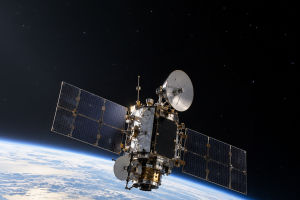 How Satellites Don't FallSatellites are constantly falling toward Earth; learn how their sideways motion keeps them orbiting
-
 Do Black Holes Crush Data?The black hole information paradox: the relationship between gravity, space, and quantum physics
-
 CometsThin air, dark water, and long sightlines make high mountain lakes an ideal stage for a bright comet.
Contact to : xyjph123@gmail.com
Privacy Agreement
Copyright © boyuanhulian 2020 - 2022. All Right Reserved.
Privacy Agreement
Copyright © boyuanhulian 2020 - 2022. All Right Reserved.