The Topspin Secret!
Topspin can change how a tennis shot behaves, giving players greater control over the ball’s flight. It is not simply about hitting harder or striking the top of the ball.
Effective topspin comes from combining racket angle, swing direction, racket speed, and body movement. When these elements work together, the ball rotates forward and follows a more controlled trajectory.
Why Topspin Matters
Topspin is created when the racket strings move upward across the back of the ball at contact. This forward rotation affects the ball as it travels through the air, helping it dip toward the court. The effect allows players to clear the net with useful height while still bringing the ball back down into the playing area.
The spin also affects the bounce. A ball carrying forward rotation can jump higher after landing, giving the opponent less time to prepare for the next shot. For players building consistency, this combination of net clearance, court depth, and bounce can make topspin an important part of a baseline game.
Start With the Right Grip
For the forehand, the Semi-Western grip is widely associated with topspin because it naturally supports a slightly closed racket face at contact. This makes it easier to combine the racket angle with an upward swing without needing to manipulate the racket aggressively at the last moment.
Grip choice still depends on playing style. A Western grip can support substantial spin but may be less comfortable when dealing with lower balls. An Eastern grip can produce topspin as well, although it generally requires more precise swing mechanics. The important point is to use a grip that allows a consistent contact position and a comfortable swing.
Build a Low-to-High Swing
A low-to-high swing is one of the clearest foundations of topspin. Before contact, the racket should drop below the ball before accelerating upward and forward. The movement should feel smooth rather than like two separate actions.
Players often make the mistake of swinging almost horizontally because that feels natural when trying to make accurate contact. However, that path tends to produce a flatter shot. Instead, focus on getting the racket underneath the ball and moving upward through the contact zone.
The racket should also travel outward toward the ball. This forward component helps create the natural rotation of the racket through the hitting area rather than simply lifting the racket vertically.
Keep the Arm and Wrist Relaxed
Trying to create extra spin by aggressively flicking the wrist can actually make the technique less effective. Excess tension can restrict racket movement and make contact less consistent.
A better approach is to maintain a relaxed hand and allow the racket to accelerate naturally. The familiar forehand “windshield wiper” finish should develop from the overall swing rather than being forced as a separate wrist action.
Use the Whole Body
Heavy topspin does not come from the arm alone. Effective shots use a kinetic chain that begins with the legs and continues through the hips, core, shoulder, arm, and racket. Research summarized in the source material connects stronger forehand mechanics with effective lower-body loading and faster movement through the upper body.
This is why simply swinging the arm harder is rarely the best solution when a shot lacks spin. A coordinated body movement can create racket speed more efficiently while helping the player maintain control.
Finish the Swing
The racket should continue moving through the ball rather than slowing down immediately at contact. A complete follow-through helps maintain the intended direction and acceleration. The racket does not need to finish at one exact height. What matters is committing to the motion beyond the contact point instead of cutting it short.
Common Topspin Mistakes
Several errors repeatedly make topspin difficult to develop. Players may try to hit the top of the ball, swing across it without enough forward movement, grip the racket too tightly, contact the ball late, or attempt to force wrist rotation.
Late contact is particularly problematic because the racket needs to be moving forward through the ball. Practising with slower incoming shots can give beginners more time to establish the correct racket drop, contact point, and upward acceleration before introducing faster rally situations.
Practice With Purpose
Developing topspin is more effective when practice has a clear progression. Start by becoming comfortable with the grip and swing path. Then practise the movement without worrying about pace, followed by slow incoming balls. Once the motion becomes more natural, gradually introduce live rallies and match-like situations.
The goal is not to chase an impressive amount of spin immediately. Consistency comes first. When the racket path, relaxed movement, and contact point become automatic, additional racket speed can be introduced without sacrificing control.
Reliable topspin is built from several connected skills rather than one special wrist movement. A suitable grip, a low-to-high swing, relaxed racket handling, effective body rotation, and a committed follow-through all contribute to the result. With regular practice and a focus on clean mechanics, players can gradually turn topspin from a difficult technique into a dependable part of their tennis game.
-
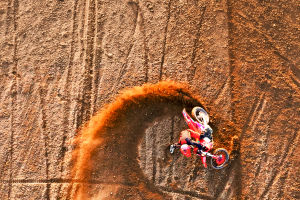 Off-Road RidingOff-Road Riding: Simple Skills to Help Beginners Stay Balanced and Handle Uneven Terrain With More Control Safely.
 -
 Rafting Safety EssentialsRafting Safety Tips: What to Wear, What to Pack, and What to Know Before You Get on the Water for Safe Trip Now.
 -
 Kids Basketball SkillsBasic Basketball Moves Every Child Can Practice to Build Better Coordination, Ball Control, and Teamwork
Contact to : xyjph123@gmail.com
Privacy Agreement
Copyright © boyuanhulian 2020 - 2022. All Right Reserved.
Privacy Agreement
Copyright © boyuanhulian 2020 - 2022. All Right Reserved.