Improve Tennis Reflexes Fast
Fast tennis is not only about how hard or accurately you hit the ball. The ability to react quickly, read an opponent's movement, and prepare for the next shot can make a major difference during a rally.
Reflexes help you respond when the ball arrives quickly, while anticipation helps you react before the ball reaches you. Both skills can be developed through focused practice rather than relying only on natural reaction speed.
Improve Your Ready Position
A good reaction starts before the ball is hit. Your position between shots should allow you to move in any direction without needing extra time to adjust.
Keep your knees slightly bent, stay balanced on the balls of your feet, and keep your upper body relaxed. Hold the racket in a comfortable position in front of you so that it is ready for either a forehand or backhand.
Avoid standing completely upright or resting heavily on one foot. A balanced ready position makes it easier to react when an opponent changes direction or hits a faster shot.
Watch the Opponent, Not Just the Ball
Anticipation begins with learning to observe what happens before the ball leaves your opponent's racket. Pay attention to their body position, racket movement, and direction of movement.
For example, an opponent who moves wide to one side may have fewer options for their next shot. Similarly, the angle of the racket and the direction of the swing can provide useful clues.
This does not mean guessing every shot. Instead, it means collecting information and using it to prepare earlier. The more consistently you observe these details, the easier it becomes to recognize familiar patterns during matches.
Practice With Random Directions
Predictable drills are useful for learning technique, but random drills are particularly helpful for developing reactions. Ask a practice partner to hit balls to different areas of the court without following a fixed pattern.
The goal is to react to each ball rather than knowing where it will go in advance. Start at a comfortable pace and gradually increase the speed as your reactions improve.
You can also vary the height, depth, and direction of the shots. This forces you to adjust your feet and racket position continuously instead of repeating the same movement.
Use Quick Reaction Drills
Short reaction exercises can be added to a regular tennis session. One simple option is to stand close to the net while a partner feeds balls toward different areas within a manageable range.
Focus on getting the racket into position quickly rather than trying to hit every ball with maximum power.
Another useful exercise involves alternating between forehand and backhand responses. Your partner can change the direction at the last moment, requiring you to recognize the shot and adjust quickly.
The purpose of these drills is to connect what your eyes see with how your body responds. Keep the movements controlled rather than turning every exercise into a race.
Train Your Footwork
Fast reactions are much more useful when your feet can move quickly into position. Good footwork allows you to reach the ball without stretching unnecessarily or losing balance. Practice short side-to-side movements, split steps, and quick recovery steps. A split step, performed as the opponent prepares to hit, can help you stay prepared to move in either direction.
Keep your steps relatively short when adjusting your position. Large steps can make it harder to change direction quickly, especially when the opponent hits the ball somewhere unexpected.
Develop Better Visual Focus
Your eyes play a major role in both reaction and anticipation. Try to follow the ball carefully while also becoming aware of your opponent's position. During practice, avoid looking away immediately after hitting your own shot. Instead, recover into position while watching what your opponent is preparing to do.
Stay Relaxed Under Pressure
Tension can interfere with quick movement. When players become nervous or overly focused on reacting quickly, they may grip the racket too tightly or make rushed movements.
Try to keep your hands, shoulders, and legs relaxed between shots. Take a controlled breath and return to your ready position after each rally.
Improving tennis reflexes and anticipation takes more than simply trying to react faster. Start with controlled exercises and gradually introduce greater speed and variation.
Over time, the goal is to make preparation feel natural, giving you more time to respond when the pace of a rally increases.
-
 Simple Canoe Safety TipsHeading out on the water?! Follow these practical canoe safety tips for a safer, smoother trip!
 -
 High-Altitude Hiking PrepReady for the mountains? These practical prep tips can make high-altitude hikes more manageable!
 -
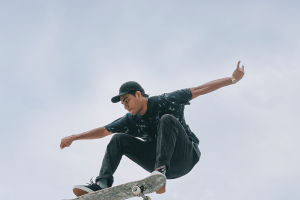 Skateboard Balance TipsStruggling to stay steady? Try these simple skateboard balance tips to feel more in control!
Contact to : xyjph123@gmail.com
Privacy Agreement
Copyright © boyuanhulian 2020 - 2022. All Right Reserved.
Privacy Agreement
Copyright © boyuanhulian 2020 - 2022. All Right Reserved.