Exploring Distant Worlds
The universe is home to an extraordinary variety of planets, each with unique characteristics that reveal the diversity of planetary systems.
From rocky landscapes and giant storms to icy environments and breathtaking ring systems, these distant worlds provide valuable insights into how planets form and evolve.
By exploring their remarkable features through simple explanations and practical activities, astronomy becomes engaging, accessible, and enjoyable for learners of all ages.
Meet the Planet Family
Our solar system contains eight planets, each with its own distinctive appearance and characteristics. Understanding what makes each planet unique is one of the easiest ways to appreciate the incredible diversity of our cosmic neighborhood.
Mercury is the smallest planet and the closest to the Sun. Venus is covered by thick clouds and is the hottest planet in the solar system. Earth is the only known planet that supports life. Mars is famous for its reddish surface and continues to inspire scientific exploration. Jupiter is the largest planet and is known for the Great Red Spot, a massive storm that has been observed for more than a century. Saturn is recognized for its spectacular ring system. Uranus rotates on its side because of its unusually tilted axis, while Neptune, the most distant planet in our solar system, is known for its deep blue color and exceptionally powerful winds.
One enjoyable way to remember the planets is by creating simple nicknames based on their most recognizable features. Associating facts with memorable images can make learning easier and improve long-term recall.
Understand Size and Distance
The sizes of planets can be difficult to imagine, so comparing them with familiar objects is a helpful exercise. If Earth were the size of a cherry tomato, Jupiter would resemble a large melon, Mercury would be similar to a pea, and Mars would be slightly smaller than Earth. Saturn would also appear enormous despite having an average density lower than that of water.
Planetary distances are equally impressive. Many illustrations compress the solar system for convenience, but in reality the planets are separated by vast regions of mostly empty space. Creating a simple walking model by assigning each step a fixed distance can help demonstrate just how enormous our solar system really is.
This perspective also highlights the remarkable achievement of space exploration, where reaching another planet requires careful planning, advanced engineering, and precise timing.
Discover What Planets Are Made Of
The four inner planets—Mercury, Venus, Earth, and Mars—are rocky worlds with solid surfaces. Beyond the asteroid belt lie the giant planets. Jupiter and Saturn are classified as gas giants, while Uranus and Neptune are known as ice giants because they contain large amounts of water, ammonia, and methane ices beneath their atmospheres.
These differences explain why planets look and behave so differently. Rocky planets feature mountains, valleys, volcanoes, and impact craters, while the giant planets have deep atmospheres, powerful winds, and extensive systems of natural satellites.
A simple way to remember this is that the inner planets are rocky, while the outer planets are giants.
Bring Space Home
Exploring planets does not require specialized equipment. Several planets can be observed with the unaided eye when viewing conditions are favorable. Venus often appears near sunrise or sunset, Jupiter is frequently one of the brightest objects in the night sky, Mars can display its distinctive reddish color, and Saturn appears as a steady point of light, although its rings require magnification to observe.
Choose an open location away from bright artificial lighting and spend a few minutes observing the sky. Recording what you see in a small journal can make each observation more meaningful. Writing down interesting facts, simple sketches, or questions about a different planet each week is an enjoyable way to strengthen your understanding and track your learning over time.
Exploring distant worlds is an inspiring way to discover the remarkable diversity of planets and the processes that shape them. By learning about their unique characteristics, understanding their immense scale, and spending time observing the night sky, astronomy becomes both approachable and rewarding. Every new discovery about these distant worlds also deepens our appreciation for the remarkable planet we call Earth.
-
 Big Satellite DishesLarge Parabolic Antennas and Their Role in Reliable Satellite Communication Systems
 -
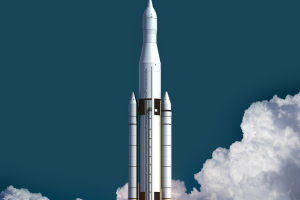 How Rockets Reach SpaceUnderstanding Gravity, Orbital Motion, and the Science Behind Space Launches
 -
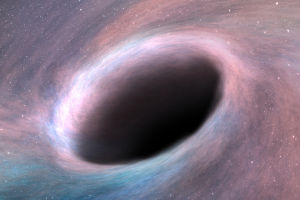 Mysteries of Black HolesWhat happens beyond the event horizon and why these cosmic giants shape galaxies
Contact to : xyjph123@gmail.com
Privacy Agreement
Copyright © boyuanhulian 2020 - 2022. All Right Reserved.
Privacy Agreement
Copyright © boyuanhulian 2020 - 2022. All Right Reserved.