Black Holes Explained
In the 1930s, a 19-year-old astrophysicist named Subrahmanyan Chandrasekhar spent a voyage by ship calculating what happens to massive stars at the end of their lives.
He concluded that stars above a certain mass must inevitably collapse under their own gravity — producing what we now call black holes.
The most famous astrophysicist of the era publicly dismissed the idea as absurd. Chandrasekhar was right. He later received the Nobel Prize. Science moves like this sometimes.
What Happens at the Event Horizon
The event horizon is the point of no return around a black hole — the boundary inside which nothing, including light, can escape. At the event horizon, something stranger happens to time itself. General relativity predicts that gravity slows time — the stronger the gravitational field, the slower time runs relative to an observer far away.
At the edge of a black hole, this effect becomes extreme: an observer near the event horizon would experience time passing far more slowly than a distant observer watching them.
The Singularity Problem
At the center of a black hole, matter is crushed into what theorists call a singularity — a point of infinite density and zero volume. This is where the mathematics of general relativity breaks down. The equations produce infinities, which is physics's way of saying the theory is missing something.
What actually happens at a singularity is genuinely unknown. A complete theory of quantum gravity — which would reconcile quantum mechanics with general relativity — is needed to answer this question. We don't have one yet.
Hawking Radiation
Stephen Hawking showed theoretically that black holes aren't entirely black. Quantum effects near the event horizon cause black holes to very slowly radiate energy — now called Hawking radiation — and gradually lose mass over astronomically long timescales.
For a stellar-mass black hole, this process would take longer than the current age of the universe. It has never been directly detected. But the theoretical argument is considered solid, and it creates a deep puzzle about what happens to information that falls into a black hole — a problem physicists call the black hole information paradox, still unresolved.
The First Image
Capturing a direct image of a black hole required pointing a network of radio telescopes spread across the entire planet at a single target simultaneously — effectively creating an Earth-sized telescope.
This collaboration, called the Event Horizon Telescope, succeeded in producing the first image of a black hole in history: a glowing ring of heated gas surrounding the dark shadow of a supermassive black hole 6.5 billion times the mass of our Sun, located 55 million light-years away.
Then, a few years later, the same collaboration captured an image of the black hole at the center of our own galaxy. Looking at it is looking at the center of the Milky Way.
A 19-year-old on a ship calculated that stars could collapse into darkness. His peers laughed. Decades later, we photographed that darkness across 55 million light-years. Then we photographed the darkness at the center of our own galaxy. Black holes are no longer theoretical curiosities — they're real, they're massive, and they're out there. Yet the hardest questions remain unanswered. What happens inside a singularity?
Does information disappear forever? Science moves slowly sometimes. But it moves. And that's enough to keep looking up
-
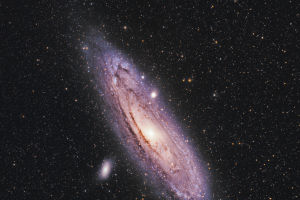 Cosmic Andromeda WondersCould This Giant Neighbor Change Our Cosmic Future? Amazing Andromeda Galaxy Facts You Need to Know!
 -
 Do Plants Hear Music?Plants have no ears, no brain, no playlists. Yet science keeps finding they respond to sound.
 -
Cosmic Andromeda WondersCould This Giant Neighbor Change Our Cosmic Future? Amazing Andromeda Galaxy Facts You Need to Know!
Contact to : xyjph123@gmail.com
Privacy Agreement
Copyright © boyuanhulian 2020 - 2022. All Right Reserved.
Privacy Agreement
Copyright © boyuanhulian 2020 - 2022. All Right Reserved.