Space Career Path
Have we ever looked up at the night sky and imagined floating beyond Earth, exploring space, and seeing our planet from above?
For many people, becoming an astronaut feels like a childhood dream that never fully disappears.
Even as daily life becomes busy, the idea of space travel still inspires curiosity about the universe and our place within it.
Eligibility and National Requirements
One of the first conditions for astronaut candidates is eligibility linked to a space agency’s participating country or region. National space programs typically require applicants to hold citizenship of member states or partner nations.
Some commercial space companies may apply more flexible rules depending on mission goals and training systems. These eligibility standards ensure clear responsibility, safety coordination, and consistent training pathways.
Academic Foundation and Education Path
A strong academic background is a key starting point. Most space agencies expect candidates to hold advanced degrees in fields such as engineering, natural sciences, mathematics, medicine, or computer science. In some cases, equivalent professional experience or specialized test pilot training can also meet requirements.
This education ensures candidates can understand complex spacecraft systems, scientific experiments, and mission procedures.
Professional Experience and Technical Ability
Education alone is not enough to stand out. Real-world experience is essential. Many programs require at least two to three years of relevant professional or research experience. Some candidates come from aviation backgrounds with extensive flight command hours, demonstrating strong decision-making skills under pressure.
Others may have worked in advanced engineering, robotics, or scientific research environments. These experiences show the ability to solve problems in real situations rather than only in theory.
Language and Communication Skills
Clear communication is a critical requirement in space missions. English is widely used in international space operations, so fluency is essential. In multinational missions, additional working languages can also be beneficial depending on cooperation agreements. Communication is not only about speaking clearly but also about understanding technical instructions quickly and accurately, especially when conditions change rapidly.
Physical Fitness and Medical Standards
Physical readiness is carefully evaluated through strict medical screening. Candidates must demonstrate strong cardiovascular health, vision stability, balance control, and overall endurance. These tests ensure the body can adapt to microgravity conditions and withstand long-duration missions.
Modern space programs also continue exploring ways to expand participation by improving spacecraft design and training support systems for a wider range of physical conditions.
Psychological Strength and Adaptation
Mental resilience is equally important. Space missions involve long periods in confined environments with limited direct contact with family and friends. Communication delays can also make conversations less immediate.
Because of this, psychological assessments focus on stress management, emotional stability, and the ability to remain focused under pressure. A calm and steady mindset helps maintain both personal well-being and team performance.
Competition, Teamwork, and Selection Pressure
The selection process is highly competitive. Thousands of applicants may apply, but only a small number are selected. Evaluators look for individuals who show leadership, adaptability, and strong teamwork skills. Experience in remote or demanding environments can be an advantage, as it demonstrates flexibility and endurance.
Since future missions may involve long-term group living in space, cooperation and communication within a team are essential for mission success.
Beyond Selection: A Full Role in Space and on Earth
Becoming part of a space program is not limited to space travel alone. Astronauts also contribute to research, technology development, training activities, and public outreach on Earth. They often act as representatives of space exploration, sharing knowledge and supporting scientific progress. This makes the role both technical and educational, requiring adaptability across many different environments.
Final Thoughts on the Journey
Becoming an astronaut is not defined by a single skill or qualification. It is a combination of education, experience, communication ability, physical readiness, psychological strength, and teamwork. Each candidate is evaluated as a complete individual, with attention to how they perform both independently and within a group.
For anyone interested in space exploration, the path may look demanding, but it is also filled with opportunities for growth and discovery. With steady learning and continuous improvement, each step brings the dream closer to reality. The universe remains open to those who stay curious and prepared for new challenges.
So, Lykkers, which part of this journey feels most surprising or inspiring to you?
-
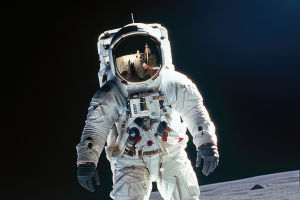 Spacewalk Prep StepsWhat Do Astronauts Go Through Before Stepping Into Space? The Full Preparation Process Revealed!
 -
 Jupiter Spin MysteryWhy Does Jupiter Spin So Fast That a Day Is Less Than 10 Hours? The Giant Planet’s Hidden Power Revealed!
 -
 Smart Lighting for EyesHow indoor light affects your vision, focus, and sleep — and what you can do to protect your eyes daily.
Contact to : xyjph123@gmail.com
Privacy Agreement
Copyright © boyuanhulian 2020 - 2022. All Right Reserved.
Privacy Agreement
Copyright © boyuanhulian 2020 - 2022. All Right Reserved.