Quantum Physics
Imagine holding a grain of sand and realizing that its behavior could explain the origins of stars, black holes, and even time itself.
Quantum mechanics, the science of the incredibly small, has turned our view of the universe upside down.
While it governs atoms and subatomic particles, its effects ripple all the way to the cosmic scale, challenging the way we think about reality.
The Strange World of Particles
At the heart of quantum mechanics is the idea that particles behave in ways that defy common sense. Unlike larger objects, they can exist in multiple states at once or instantly affect distant particles through entanglement.
Key concepts to grasp:
Superposition – particles can be in two states simultaneously until observed.
Entanglement – linked particles share information instantly across distances.
Quantum tunneling – particles can pass through barriers that should be impossible.
Physics enthusiasts can visualize superposition using simple experiments like polarized light filters, which illustrate how particles can have multiple orientations until measured.
Implications for Cosmology
Quantum mechanics isn't just about small scales—it informs how the universe behaves at its largest. The early universe, for instance, is thought to have been shaped by quantum fluctuations that seeded galaxies and cosmic structures.
Ways quantum mechanics influences our understanding of the cosmos:
Explaining cosmic inflation – tiny quantum ripples can expand to form large-scale structures.
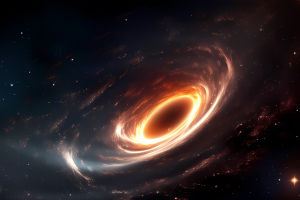
Black hole behavior – quantum effects may solve paradoxes about information loss.
Dark energy theories – quantum field energy may contribute to the universe's accelerated expansion.
Researchers use computer simulations that incorporate quantum fluctuations to model galaxy formation, giving students and scientists a hands-on way to connect theory with observable structures.
Quantum Mechanics Meets Gravity
One of the biggest puzzles in modern physics is uniting quantum mechanics with gravity, described by general relativity. Understanding how these forces coexist could explain black holes, neutron stars, and even the birth of the universe.
Current approaches include:
Quantum gravity models – frameworks like loop quantum gravity explore discrete space-time units.
String theory – posits that fundamental particles are tiny vibrating strings.
Observational tests – precise measurements of gravitational waves can reveal quantum effects at cosmic scales.
Amateur astronomers can follow gravitational wave detections reported by observatories like LIGO, helping them understand how quantum effects might ripple through spacetime.
Practical Technologies Inspired by Quantum Insights
Quantum mechanics isn't just theoretical—it drives real-world technology, some of which may help us study the universe even further.
Applications include:
Quantum sensors – detect minute gravitational or magnetic changes in space.
Quantum computing – simulate complex cosmic events that classical computers cannot.
High-precision clocks – aid in satellite navigation and timing for astronomical observations.
Students and hobbyists can experiment with basic quantum sensors, such as magnetometers, to detect tiny variations in magnetic fields, offering a hands-on connection to cosmic studies.
Quantum mechanics reminds us that the universe is stranger and more interconnected than our intuition suggests.
From particles to galaxies, its principles shape reality at every scale. By exploring these principles and applying them through technology, we can uncover mysteries that were once beyond imagination, opening a window into the fundamental nature of existence.

Contact to : xyjph123@gmail.com
Privacy Agreement
Copyright © boyuanhulian 2020 - 2022. All Right Reserved.
Privacy Agreement
Copyright © boyuanhulian 2020 - 2022. All Right Reserved.